
- New Historical Release • 2025
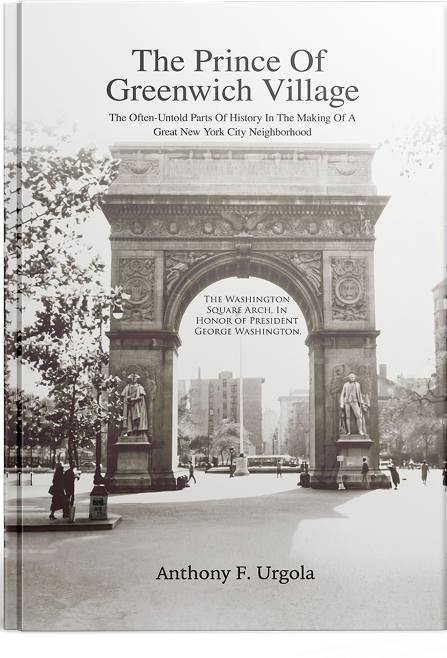
The Prince of
Greenwich Village
“The Often-Untold Parts of History in the Making of a Great New York City Neighborhood”
An exhaustive, narrative-rich historical study by Anthony F. Urgola uncovering the radical artists, forgotten landholders, subterranean streams, and cultural shifts that shaped Manhattan’s most legendary enclave.
- New Historical Release • 2025
The Prince of
Greenwich Village
“The Often-Untold Parts of History in the Making of a Great New York City Neighborhood”
An exhaustive, narrative-rich historical study by Anthony F. Urgola uncovering the radical artists, forgotten landholders, subterranean streams, and cultural shifts that shaped Manhattan’s most legendary enclave.
Author Biography
Meet Anthony F. Urgola

Anthony F. Urgola
Author
Anthony F. Urgola is a dedicated New York City native, printer, history buff, entrepreneur, business person and someone who has spent decades researching the history of Manhattan and Greenwich Village’s historic neighborhoods.
Born and raised in New York City, Urgola developed a deep fascination with the physical artifacts of the past—from hidden boundary markers and subterranean water channels. His work bridges rigorous archival scholarship with compelling narrative storytelling.
In The Prince of Greenwich Village, Urgola synthesizes years of field studies, interviews with long-time local residents, and as someone who lived it, into a definitive account of how one neighborhood came to symbolize freedom, art, and urban resilience.
New York City was built by successive waves of immigrants over centuries, starting with Dutch and British settlers and black slaves in the 1600’s followed by massive waves of Irish, German, Italian, and Eastern European Jewish laborers in the 19th and 20th centuries, and later contribution from Caribbean, Latin American, and Asian communities.

Send a Note to the Author
Historical Portrait Gallery
The People Behind the History
Discover the architects, community activists, poets, italian immigrant, and mysterious figures whose lives
defined Greenwich Village history.
- ARCH-1889-SW
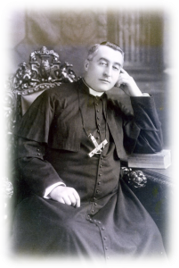
Father Antonio Demo
Father Antonio Demo was a New York City Italian American priest and civic activist.
- ACTV-1961-JJ
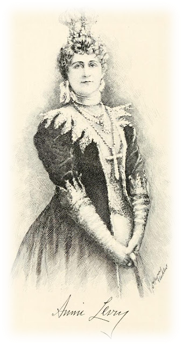
Annie Leary
Countess of the Holy Roman Church
Annie Leary was an American Papal countess, prominent society figure, and philanthropist in late nineteenth- and early twentieth-century New York City.
- LIT-1837-EAP
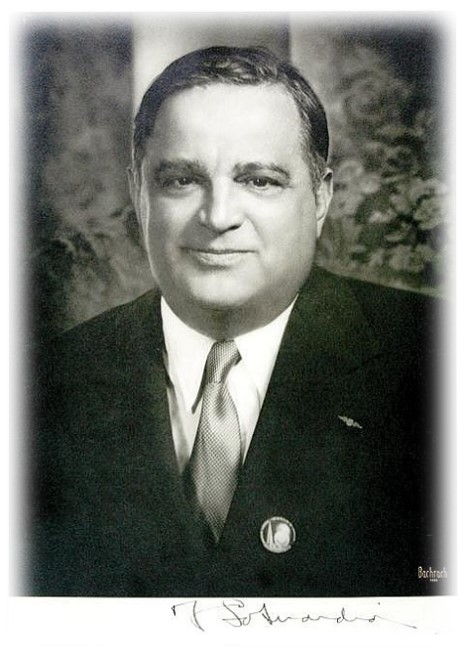
Fiorello Henry La Guardia
American Attorney and Politician
Fiorello Henry La Guardia was an American attorney, politician, and Reformist mayor of New York City.
- SALON-1912-MD
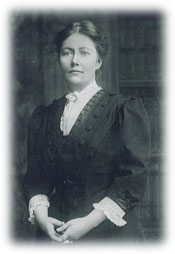
Mary Simkhovitch
Founder of Greenwich House
Mary Melinda Kingsbury Simkhovitch was an American city planner and social worker. She was one of the first members of the New York City Housing Authority, serving from its creation in 1934 until 1948.
- ARCH-1889-SW
Father Antonio Demo
Father Antonio Demo was a New York City Italian American priest and civic activist.
- ACTV-1961-JJ
Annie Leary
Countess of the Holy Roman Church
Annie Leary was an American Papal countess, prominent society figure, and philanthropist in late nineteenth- and early twentieth-century New York City.
- LIT-1837-EAP
Fiorello Henry La Guardia
American Attorney and Politician
Fiorello Henry La Guardia was an American attorney, politician, and Reformist mayor of New York City.
- SALON-1912-MD
Mary Simkhovitch
Founder of Greenwich House
Mary Melinda Kingsbury Simkhovitch was an American city planner and social worker. She was one of the first members of the New York City Housing Authority, serving from its creation in 1934 until 1948.
- LABOR-1834-MS
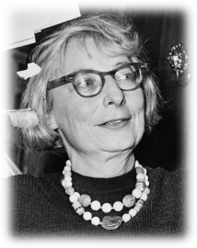
Jane Jacobs
Author of “The Death and Life of Great American Cities”
Jane Isabel Jacobs was an American-Canadian journalist, author, theorist, and activist who influenced urban studies, sociology, and economics.Her book The Death and Life of Great American Cities (1961) argued that “urban renewal” and “slum clearance” did not respect the needs of city-dwellers.
- HIST-1895-GV
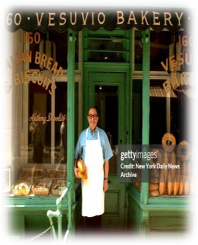
Anthony (Tony) Dapolito
Board 2 member of Manhattan Community
Anthony Dapolito was on Manhattan Community Board 2 for over fifty years. A lifelong villager, he was involved in several of the battles against Robert Moses, in particular, the effort to save the South Village from an urban renewal plan, and the battles against the Lower Manhattan Expressway.
- HIST-1895-GV
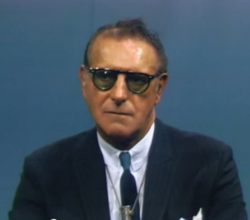
Carmine Gerard DeSapio
DeSapio on Firing Line, May 1, 1967
Carmine Gerard DeSapio was an American politician from New York City. He was the last head of the Tammany Hall political machine to dominate municipal politics.
- LABOR-1834-MS
Jane Jacobs
Author of “The Death and Life of Great American Cities”
Jane Isabel Jacobs was an American-Canadian journalist, author, theorist, and activist who influenced urban studies, sociology, and economics.Her book The Death and Life of Great American Cities (1961) argued that “urban renewal” and “slum clearance” did not respect the needs of city-dwellers.
- HIST-1895-GV
Anthony (Tony) Dapolito
Board 2 member of Manhattan Community
Anthony Dapolito was on Manhattan Community Board 2 for over fifty years. A lifelong villager, he was involved in several of the battles against Robert Moses, in particular, the effort to save the South Village from an urban renewal plan, and the battles against the Lower Manhattan Expressway.
- HIST-1895-GV
Carmine Gerard DeSapio
DeSapio on Firing Line, May 1, 1967
Carmine Gerard DeSapio was an American politician from New York City. He was the last head of the Tammany Hall political machine to dominate municipal politics.
The Book Overview
The Story Behind Greenwich Village
“Greenwich Village was not created by architects or city planners; it was carved out by local property owners and farmers led by prominent landowner Henry Brevoort Sr. who refused
to yield to Manhattan’s grid.”
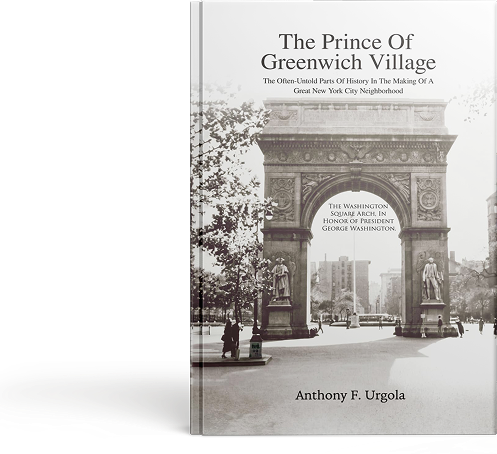
Uncovering the Lost Chronicles of New York's Most Legendary Enclave.
In this definitive historical exploration, Anthony F. Urgola uncovers the hidden social, architectural, and human forces that transformed a quiet farmland escape into the cultural beating heart of New York City. Beyond the familiar myths lies a story of fierce resistance, uncredited labor, secret waterways, and larger-than-life characters who forged Greenwich Village.

“ A neighborhood born from Dutch colonies, shaped by visionaries, and preserved through generations of untold stories.”
- Often untold history of Greenwich Village
- Freed Black Dutch Slaves
- Subterranean Minetta Brook secrets
- Prohibition speakeasy escapes tunnels
- Italian South Greenwich Village
Section III • Chronological Archives
The Making of Greenwich Village
Follow the key eras detailed in Anthony F. Urgola’s manuscript—from early native tobacco fields to the stonemason
riots, bohemian republics, and historic preservation movements.
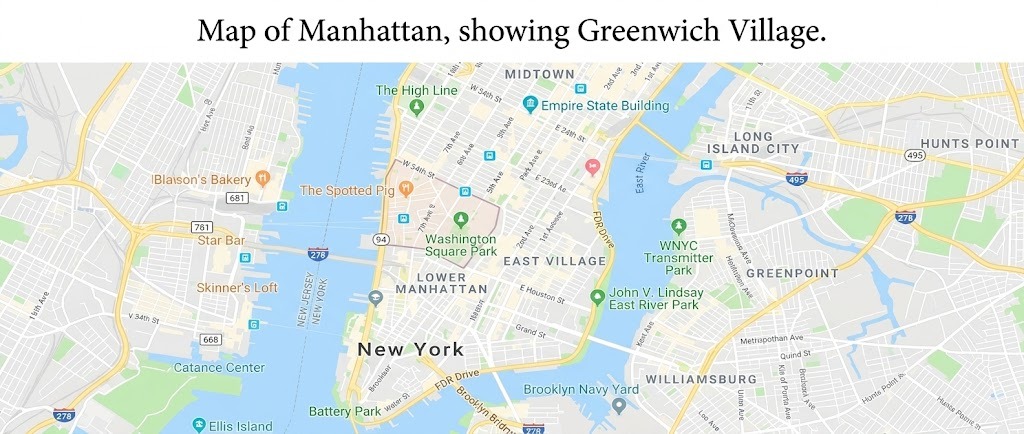
Interactive Cartography
Places That Tell the Story
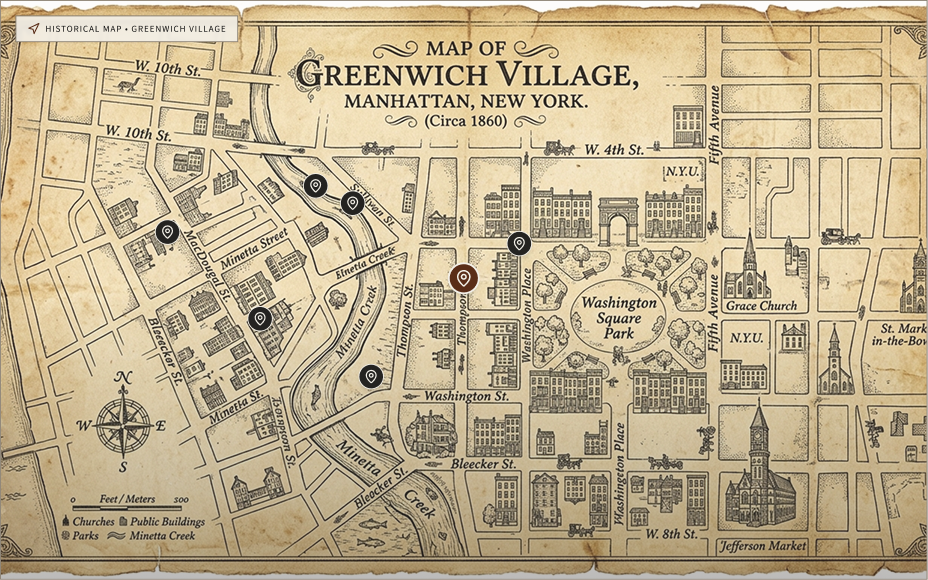
Washington Square Arch
- Washington Square Park North
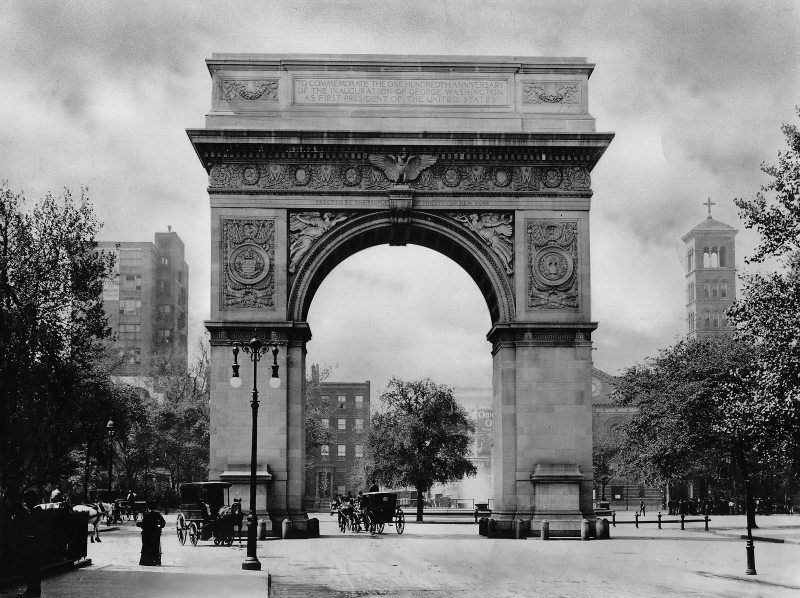
Washington Arch, constructed of white Tuckahoe marble, was conceived by Stanford White, who adapted the form of a Roman triumphal arch, with a design close to the 1st-century Arch of Titus in Rome. They were monuments which the Roman Republic and later emperors built throughout the empire to celebrate a victory or event. The monument’s total height is 77 feet. The piers stand 30 feet apart and the arch opening is 47 feet high. The iconography of the Arch centers on images of war and peace.
- Referenced in Chapter 8 & Chapter 11
Interactive Cartography
Places That Tell the Story
Washington Square Arch
- Washington Square Park North
Washington Arch, constructed of white Tuckahoe marble, was conceived by Stanford White, who adapted the form of a Roman triumphal arch, with a design close to the 1st-century Arch of Titus in Rome. They were monuments which the Roman Republic and later emperors built throughout the empire to celebrate a victory or event. The monument’s total height is 77 feet. The piers stand 30 feet apart and the arch opening is 47 feet high. The iconography of the Arch centers on images of war and peace.
- Referenced in Chapter 8 & Chapter 11
Immersive Historical Spread
More Than a Neighborhood
ARCHIVAL CONTRAST
THEN
GREENWICH VILLAGE
THE STORIES BEHIND THE STREETS
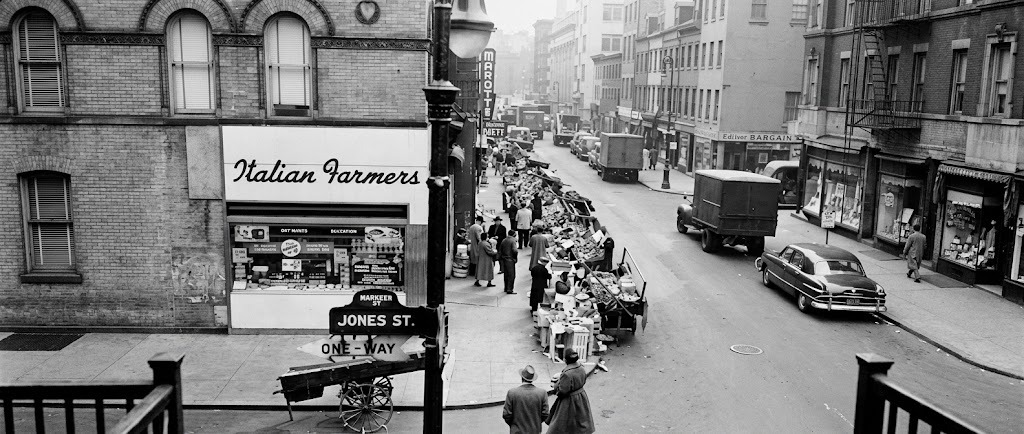
- Federal, Greek Revival, and Victorian High Gothic Structures
19th Century Brick & Tuckahoe Marble
“Every lintel and doorstep was carved by hand before steam machinery changed the city
forever.”
- Federal, Greek Revival, and Victorian High Gothic Structures
19th Century Brick & Tuckahoe Marble
“Every lintel and doorstep was carved by hand before steam machinery changed the city
forever.”
- Federal, Greek Revival, and Victorian High Gothic Structures
19th Century Brick & Tuckahoe Marble
“Every lintel and doorstep was carved by hand before steam machinery changed the city
forever.”
- Federal, Greek Revival, and Victorian High Gothic Structures
19th Century Brick & Tuckahoe Marble
“Every lintel and doorstep was carved by hand before steam machinery changed the city
forever.”