
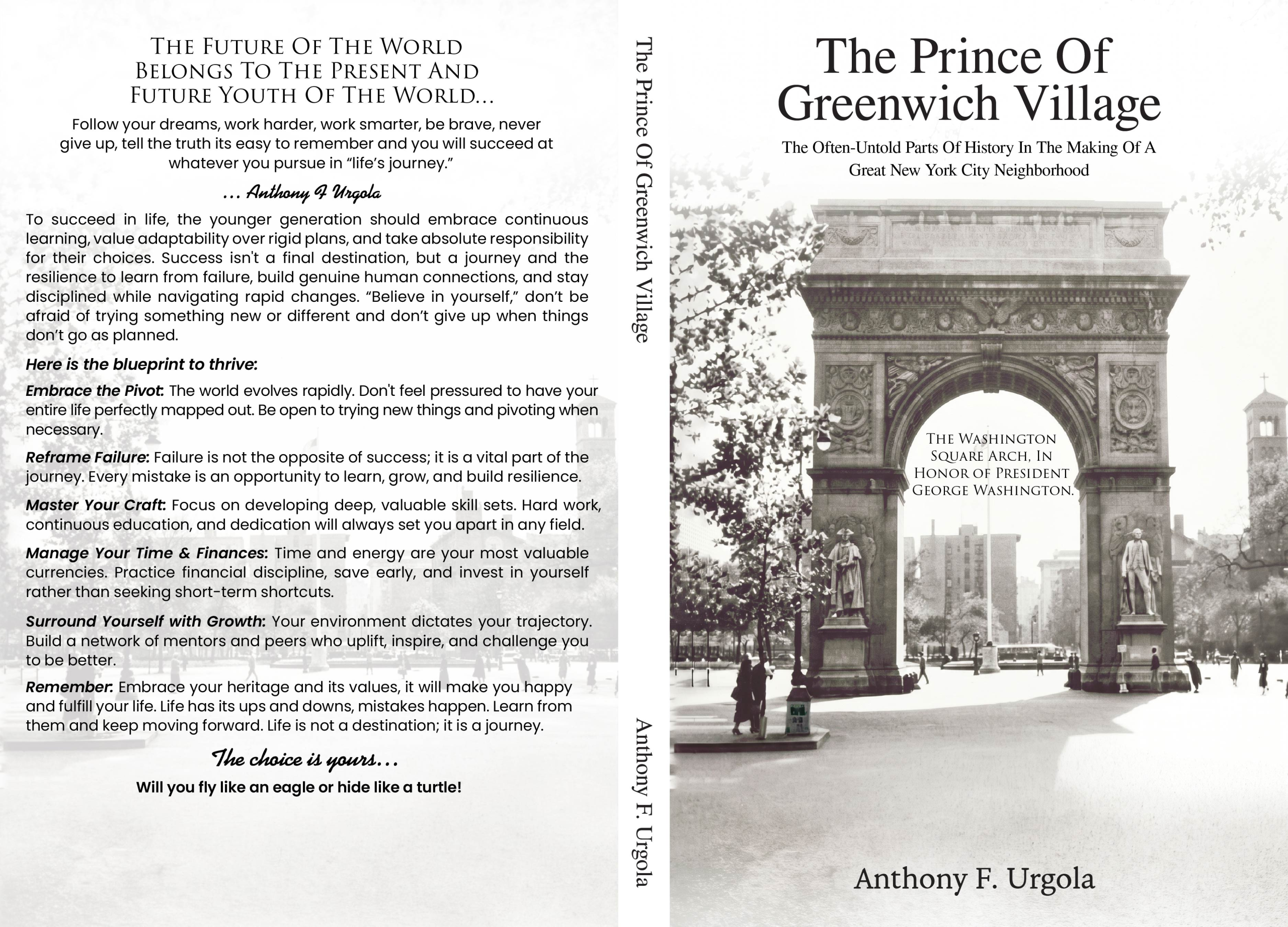
The History of New
York City
Five Points: The Gateway for Arriving Immigrants
Following the Dutch and British settlers of the 17th and early 18th centuries, most 19th-century immigrants—including Germans, Irish, Chinese, Eastern European Jews, and earlyarriving Italians—initially settled on the Lower East Side of Manhattan. The neighborhood was commonly known as “Five Points.”
Indigenous Peoples of Manhattan Before the Dutch
Before the Dutch arrived in the 17th century, Manhattan was far from empty—it was already home to the Lenape (also called the Delaware people), who had inhabited the region for centuries. They called the island Mannahatta, a name meaning “hilly island.”
Lenape Life and Culture
The Lenape were Algonquian-speaking peoples and organized their society along matrilineal lines, tracing ancestry through the mother. Communities were organized into clans, and custom typically required marriage outside one’s own clan.Their social structure centered on communal living, with 2 extended family groups sharing large longhouses constructed from wood and bark.
Skilled hunters, gatherers, and cultivators, the Lenape relied on a combination of hunting deer, beaver, raccoon, and rabbit—and farming, primarily maize, beans, and squash. The island’s rivers, forests, and abundant wildlife sustained their way of life, while the harbor served as a vital route for travel and food gathering.
Territory and Trade
The Lenape’s ancestral territory, known as Lenapehoking, extended from present-day New Jersey to eastern Pennsylvania, encompassing all of what is now New York. Renowned for their extensive trade networks, the Lenape exchanged furs for European goods, including beads, cloth, and firearms. One of their principal trade routes, Wickquasgeck, traversed the very land that would later become Manhattan’s streets, including what is now Broadway.
Dutch Contact and Displacement
Upon establishing New Amsterdam in 1624, the Dutch initially engaged the Lenape in trade. The well-known 1626 “purchase” of Manhattan by Peter Minuit remains a subject of 3 historical debate. Yet, it nonetheless marked the onset of Dutch dominion and the Lenape’s gradual displacement from their homeland. The erection of a defensive wall around the settlement in the 1660s—on the site of today’s Wall Street, in lower Manhattan’s financial district—further curtailed Lenape access to the island.
Long before European colonization, the Lenape the original people of Mannahatta—inhabited Manhattan Island in complex, well-organized communities, leaving an enduring imprint on the land.
The Lenape, originally called the people of Manahatta, were the indigenous inhabitants of
Manhattan Island, living in complex communities and shaping the land long before European
colonization.
Section IV • Historical Portrait Gallery
The People Behind the History
Discover the architects, community activists, poets, immigrant stonemasons, and mysterious figures whose lives
defined Greenwich Village history.
- ARCH-1889-SW

Stanford White
Architect of the Arch & Gilded Age Visionary
Partner in McKim, Mead & White who designed the Washington Square Arch,
the Judson Memorial Church, and shaped the Gilded Age skyline of New York.
- Chapter 8: The White Arch
- ACTV-1961-JJ

Jane Jacobs
Urban Activist & Savior of Greenwich Village
Author of “The Death and Life of Great American Cities” who led the
community opposition against the Lower Manhattan Expressway.
- Chapter 18: The Sidewalk Ballet
- LIT-1837-EAP
Edgar Allan Poe
Literary Trailblazer of Carmine Street
Master of macabre fiction who lived at 85 Carmine Street and 113 Waverly
Place while editing major literary journals.
- Chapter 4: Shadows on Carmine Street
- SALON-1912-MD

Mabel Dodge Luhan
Patron of the Avant-Garde & Salon Leader
Hostess of the famous Wednesday evening political and artistic salons at 23
Fifth Avenue that ignited the Village bohemian movement.
- Chapter 10: The Evenings at 23 Fifth
- LABOR-1834-MS

The Immigrant Stonemasons
The Unsung Builders of Greenwich Village
Italian, Irish, and Scottish stonecutters whose hand craftsmanship shaped
the brownstones, stoops, and arches.
- Chapter 5: Hammers on the Parade Ground
- HIST-1895-GV

The Prince of Greenwich Village
The Central Historical Mystery Figure
The eccentric historical figure whose personal archives and secret diaries
anchor Anthony F. Urgola’s research.
- Chapter 12: The Man in the Velvet Coat